
Dawson Oaks Trailer Park How the Supervisor actually plays
Everyone can see you. Your only real weapon is information, and the arrest clock is already ticking.
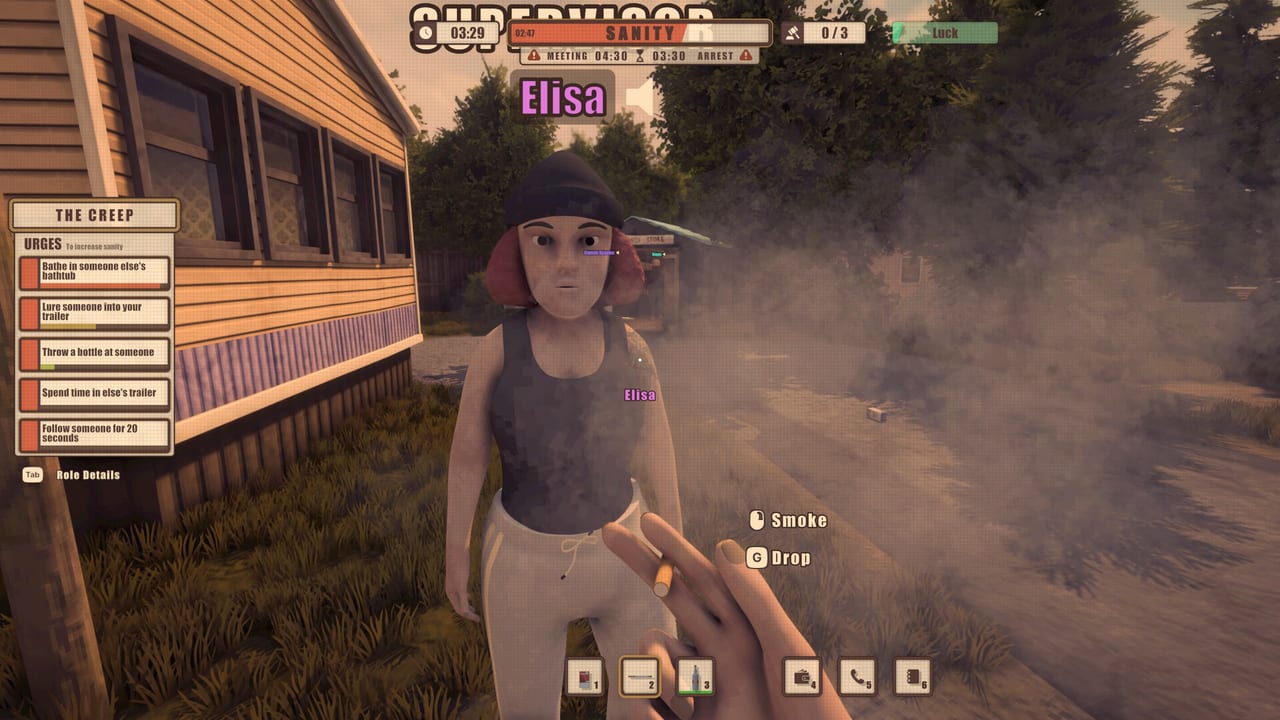
The Supervisor in Dawson Oaks Trailer Park is the public cop of the trailer park. Steam copy is short on purpose: watch everyone, figure out who is doing what, and call the police before it is too late. Then it adds the real rule. You only have power if you have information.
This is not a hidden-impostor job. Playtests showed a Supervisor nametag other players could see. You walk the same dirt as the suspects, you hear the same proximity voice, and you carry a flip phone. People will talk about you in the open because they already know which silhouette is the cop. Your job is to turn porch gossip, Snitch texts, and crime banners into arrests before the HUD Arrest timer hits zero.
Striped Panda Studios still has the Steam Windows launch set for 17 September 2026 at $9.99. Treat every playtest clip as a rehearsal, not a live patch note. For the practical loop, keep how to play Supervisor open next to this page.
You are public. Play like it.
Social deduction players often hide. The Supervisor cannot. If you lurk behind a trailer for three minutes, suspects will narrate that on proximity voice. If you sprint at every joint and mailbox, they will stop criming until you leave and then dump three urges at once.
A useful public cop looks bored on purpose. Walk the lot. Pause on porches. Check the Community Center doors. Listen more than you accuse. The map is your beat: trailers for private urges, Piss Creek Saloon for slots and bar talk, yards for bottles and mailboxes.
Because you are visible, suspects will perform for you. A Drunk may smash a bottle the second you look away. A Creep may wait until you are inside a meeting. Do not treat one clean minute as innocence. Treat it as a gap.
Information is the kit
Steam says the Supervisor’s power is information. In playtests that information arrived in three ugly piles.
Your eyes. Crime banners can fire when you witness an urge. That is the cleanest proof you will get, and it is also the rarest, because competent suspects crime behind doors. How not to get caught exists because people learn to close those doors.
Your ears. Proximity voice is the real tell. Junkies ask for weed. Moonshine Cooks hunt a buyer. Scrappers ask for scrap metal in a loop. Gamblers drift toward the 777 SLOT cabinets. None of those sentences are a confession in court, but they are a role shortlist.
Your Snitches. The Snitch is hidden from the park and visible to you as an informant. Screenshots showed Snitch-only urges such as sending a message to the Supervisor and observing players from a trailer. That pipeline is why the cop can win without seeing every crime. It is also why suspects call meetings: they are hunting your inbox, not your hat.
If the lobby votes a Snitch into community service, intel dries up. Playtests often ran two Snitches, so losing one hurt and losing both was a collapse. Do not confirm identities in public voice. Do not stand next to the same player after every text. Do not defend a name so hard that the Community Center writes it on the board for you.
The arrest timer
The HUD arrest timer is the Supervisor’s fail state sitting in the corner. You cannot wait for a perfect spreadsheet of all eleven roles. You also cannot spray arrests on vibes. A wrong call trains the lobby to ignore you. A late call means the suspects already found the Snitch and the park is theirs.
Work in batches. After two or three solid tells, arrest the loudest confirmed role, then reset. Drug Dealers who run open $2 weed offers are easier to name than a Hobo collecting cans. Use the suspect role tiers as a playtest heat map of who leaks, not as a commandment.
Meetings interrupt that clock. When the horn goes, you are walking into the Community Center as the most obvious person in the room. Speak in facts: who sold, who followed, who stood at the slots. If you only say I have a feeling, you have handed the round to whoever has a better story.
What a good Supervisor does in the first ten minutes
- Mark the Snitch private tells and never repeat the cover role out loud.
- Walk a full lap so you know which trailers still have lights and traffic.
- Note money talk, weed talk, moonshine talk, and scrap talk as role buckets, not as instant arrests.
- Watch the saloon: public slots make Gambler noisy; voted-out players who can only speak at the bar are already solved.
- Spend the arrest timer on names you can defend in a meeting, then go back to walking.
Controls and the lobby checklist cover the unglamorous setup: voice range, HUD meters, and not talking over your own informants. How to find the Snitch is written for suspects; read it anyway so you know the accusations coming at your teammates.
The arrest timer is not a license to guess. If you still cannot name a role, keep walking the lot, keep the flip phone quiet, and wait for a Snitch who still has a trailer to report from.
Frequently Asked Questions
Quick answers about roles, meetings, and the Steam launch.
Can other players see who the Supervisor is?
Yes. The Supervisor is a public role. Playtests showed a visible nametag, so you should assume the whole park knows which player is the cop.
What does the Supervisor actually win with?
Information. Steam copy says you only have power if you have information. That means witnessed crimes, proximity-voice tells, and reports from hidden Snitches before the arrest timer ends.
What happens if Snitches get voted out?
Intel dries up. Voted-out players went to community service in playtests and could speak only in the Piss Creek Saloon bar. Protect informant identity harder than you protect your own pride in a meeting.
Where should a Supervisor walk first?
Trailers for private urges, then Piss Creek Saloon for slots and bar talk, then yards for bottles and mailboxes. The map guide is the beat sheet.